Physical simulations
Molecular Dynamics
Strong physical rigor, but applying them to full systems can require high compute cost and long runtimes.


ATOM-B analyzes functional regions of proteins using discrete physical maps, enabling the identification of cavities, active sites and therapeutic regions with speed, precision and traceability.
Today's platforms often choose between costly physical simulations or statistical models dependent on historical data. ATOM-B proposes a third path: fast, auditable discrete physical analysis.
Strong physical rigor, but applying them to full systems can require high compute cost and long runtimes.
Accelerates exploration, but may depend on historical data and lose predictive power for understudied or novel targets.
Instead of simulating the whole molecular system, ATOM-B identifies only the regions that influence the interaction between a protein and a potential drug.
Processing designed to run in seconds or minutes depending on structural complexity.
Based on geometric, electrostatic and directional observables.
Every prediction can be traced back to the voxel-level physical values that generated it.

ATOM-B turns a molecular structure into physical maps that allow teams to locate, classify and compare functional regions.
Start from an experimental or modeled protein structure.
The molecular space is split into small 3D volumes.
Cavities, channels, interfaces and key structural regions are classified.
Every prediction preserves its physical origin for review and audit.
ATOM-B evaluates three fundamental properties of each molecular region.
Measures how accessible, deep, or protected a space is within a protein.
Evaluates predominant chemical forces that may favor or hinder molecular interaction.
Analyzes direction and magnitude of forces that guide a therapeutic molecule approach.
ATOM-B turns protein structures into actionable information for research teams, biotech and pharma.
Map of cavities, binding sites, channels and relevant interfaces.
Classification of rigid, flexible, exposed or overpacked regions.
Identification of functional points where therapeutic interaction may occur.
Traceable explanation of each prediction based on discrete physical properties.
Export-ready outputs for docking, structural analysis or rational design workflows.
ATOM-B is designed to support early phases of structure-based drug discovery.
Locates pockets and functional spaces within proteins.
Prioritizes regions with therapeutic potential.
Identifies regions that could regulate multiple protein functions.
Recognizes structural and catalytic influence of Zn, Fe, Mg, Cu and Mn.
Evaluates how mutations may alter function, stability or resistance.
Turns protein structures into searchable, comparable and scalable maps.
ATOM-B operates on auditable discrete physics, focusing on the regions that truly participate in molecular function.
| Criteria | Molecular Dynamics | Generative AI | ATOM-B |
|---|---|---|---|
| Speed | Low / medium | High | High |
| Compute cost | High | Medium | Low / medium |
| Traceability | High | Variable | High |
| Historical data dependency | No | Yes | No |
| Understudied targets | Limited by cost | Limited by data | Analyzable by physics |
ATOM-B is designed so each output can be contrasted against structural information such as crystallographic coordinates, reported cofactors, structural waters and functional residues.
Comparison between predicted pharmacophoric centers and experimentally observed metals/cofactors.
Identification of regions compatible with ordered water molecules inside cavities.
Every prediction can be traced to confinement, electrostatics and force direction.

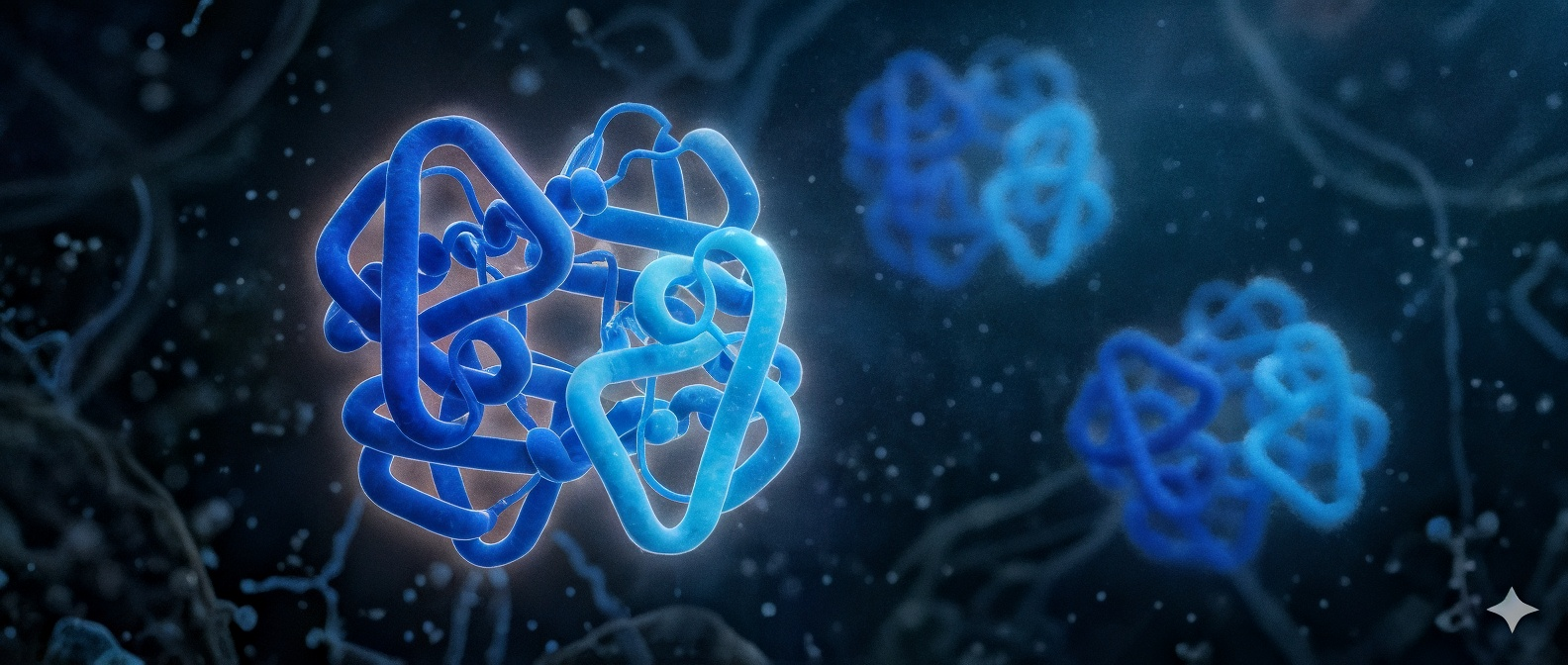
While Molecular Dynamics computes the behavior of the entire protein and its environment, ATOM-B focuses only on relevant regions, drastically reducing analysis time and resources.
It can transform protein structures into indexable functional maps, enabling search, comparison and prioritization of therapeutic regions at scale.
ATOM-B is aimed at organizations that need speed, physical rigor and traceability in early decisions.
Early prioritization of targets, active sites and therapeutic opportunities.
Exploration of understudied proteins and initial structural validation.
Physical analysis of cavities, cofactors, interfaces and functional regions.
Integration with docking, visualization or computational discovery pipelines.
At ATOM-B we remove black boxes with a platform where every prediction is auditable down to the voxel level. If you need scientific rigor, speed and traceability, request a demo.
Share the basic information about your project. The team reviews the case and defines the best evaluation route for ATOM-B.